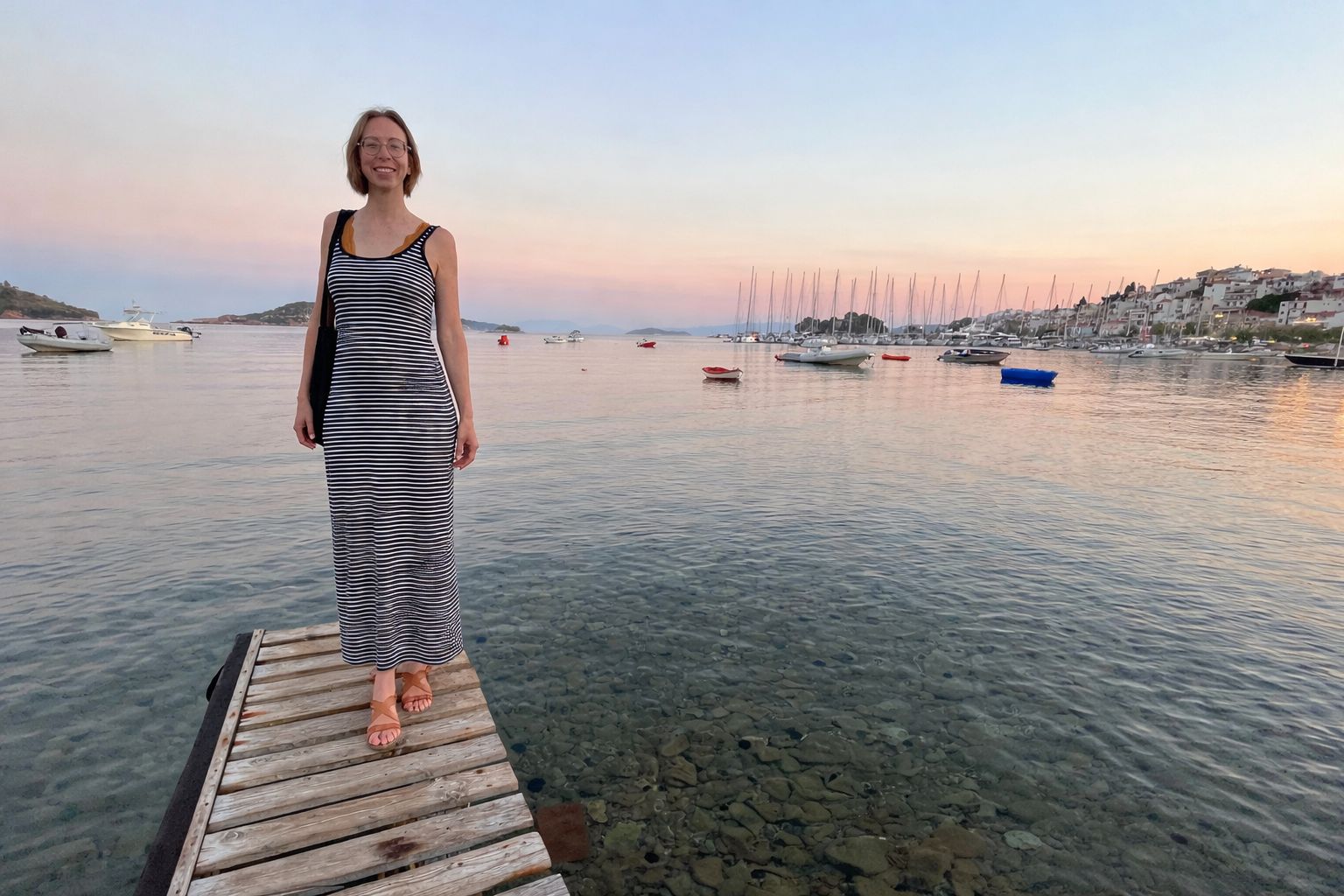
I chose Skiathos with a very specific idea of Greece in mind. I was looking for something quintessential Greek —clear water, recognizable beaches, strong Mediterranean light—but also an island with a bit of history, stamina, a touch of special and small enough to be fully appreciated in one week.
Skiathos fit the bill: it’s just over 7 miles long, it has an airport that made getting there remarkably easy, and it offered a balance between iconic scenery and a lived-in sense of history, old and recent. My travel style is always slightly indie. I’m consistently drawn to places with historical depth, and I tend to avoid overly curated experiences. I look for quiet, for continuity, for places that still function beyond tourism. This itinerary reflects that approach: I saw, I chose, I adjusted—day by day—in search of a Skiathos that felt both representative and genuine.
Getting Oriented in Skiathos Town
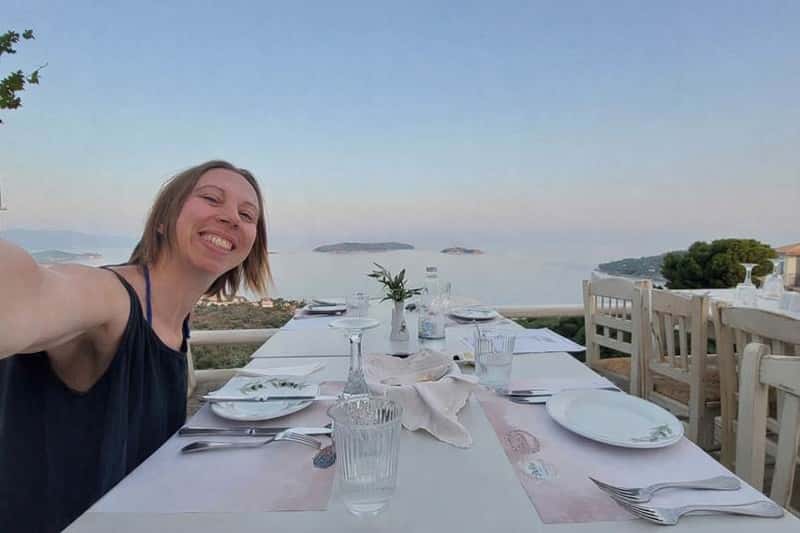
When I arrived, I deliberately did very little. I walked. I watched Skiathos Town shift throughout the day—quiet and almost contemplative in the morning, social and animated by night. I chose to stay here first to understand the island’s rhythm before moving on. I ate slowly through town, mixing casual meals with more deliberate choices. One standout was Agnadios, set above the city with a wide view, but just as were the simple tavernas along the waterfront: sea a few feet away, cats everywhere, children running freely, an immediate sense of vacation.
Skiathos has a layered history that quietly shapes its present. Inhabited since prehistoric times, it was part of the Athenian sphere in the 5th century BC, then passed through Roman and Byzantine control before Venetian rule in the Middle Ages, when piracy influenced settlement patterns. Under Ottoman rule, residents moved inland for safety, explaining the island’s monasteries and interior paths. In 1807, one of the first Greek flags was raised at the Monastery of Evangelistria, linking Skiathos to Greece’s War of Independence. Much of the town was rebuilt after WWII bombings in 1944, which explains the mix of neoclassical reconstruction and restrained modern design visible today.
Exploring the Southern Coast—Selectively
The south coast is the most accessible part of the island. A single road runs along it, supported by a reliable bus system. There are many fully equipped beaches here, and everywhere else on the island —some extremely so—with rows of loungers, music, and polished service. They function efficiently, but they’re not what I look for. I prioritize peace, calm, and places where I don’t feel absorbed into a system.
I still visited Koukounaries, because it’s essential to understanding Skiathos. Its golden sand and pine forest backdrop have been admired since the 1960s, when Greek islands first entered international tourism consciousness. It’s beautiful, orderly, and emblematic—but after seeing it, I kept moving.
The Beaches I Actually Chose
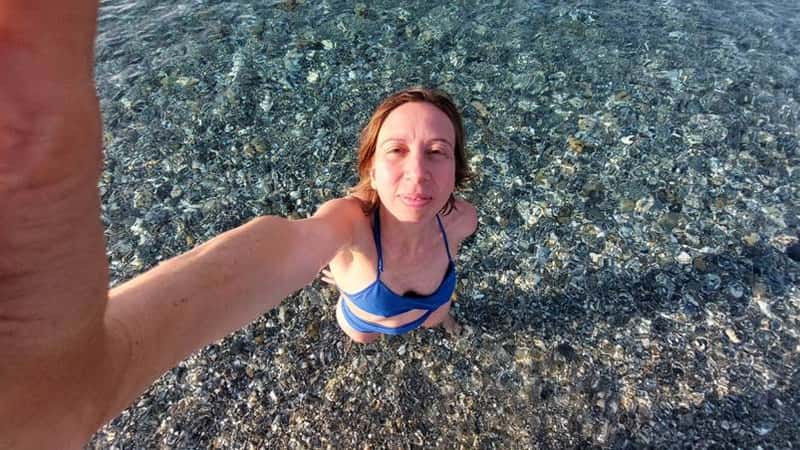
Skiathos offers over 60 beaches altogether, but they differ dramatically from one another—fully organized stretches with rows of loungers, small urban beaches, remote coves reached by dirt roads, and wild pockets of coastline accessible only by boat. That level of variety makes the island generous, but it also makes me selective. With so much choice, I get picky, and I don’t settle easily. I’m not interested in beaches designed to keep you in one place all day; I look for calm, space, and a sense of quiet that feels earned rather than curated.
One of my favorite discoveries was Xanemos, located directly beneath the airport runway. Despite being incredibly accessible—the road is flat, the drive from town is short—the beach itself is exceptional. It’s peaceful, the water is remarkably clear, and the contrast between aviation infrastructure and pristine sea creates a strange, memorable tension. Planes occasionally fly low overhead, but they’re neither loud nor unsettling. In fact, they’re fun to watch, and my kids were completely amused by the spectacle.
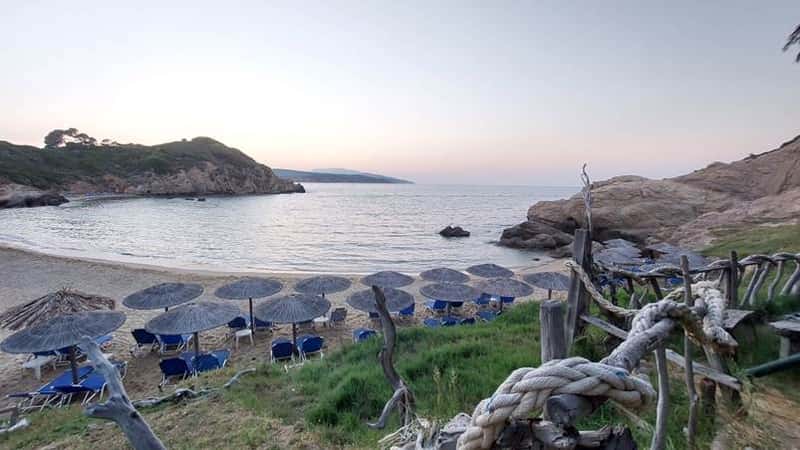
Another favorite was Krifi Ammos. More remote, more contained, deeply Mediterranean in character. Historically, this side of the island was less developed due to terrain and access, and that relative isolation still defines the experience. Here I found silence, soft light, and a sense of balance that made time feel slower.
Lalaria Beach: A Conscious Attempt to Reach Paradise
Lalaria Beach was one of the reasons I chose Skiathos: it is extraordinary (or I should say it is supposed to be since my attempt to reach it failed). White limestone arches, smooth pale stones, and water that reflects light almost unnaturally. But it’s important to be clear: reaching Lalaria is always an attempt. Boat trips are booked from the port of Skiathos, and everything depends on wind, sea conditions, and the type of excursion you choose. Accepting uncertainty is part of the experience.
I learned quickly that some trips turn into full-on booze cruises, with loud music and a party atmosphere. If you want to avoid that, it’s essential to ask questions before booking. When weather conditions are unfavorable, trips may be canceled before departure—sometimes with a refund. If conditions worsen during the journey, boats often divert to smaller islets or alternative beaches. They’re always beautiful, and the day is rarely wasted, even if Lalaria remains out of reach.
Following History Through the Monasteries
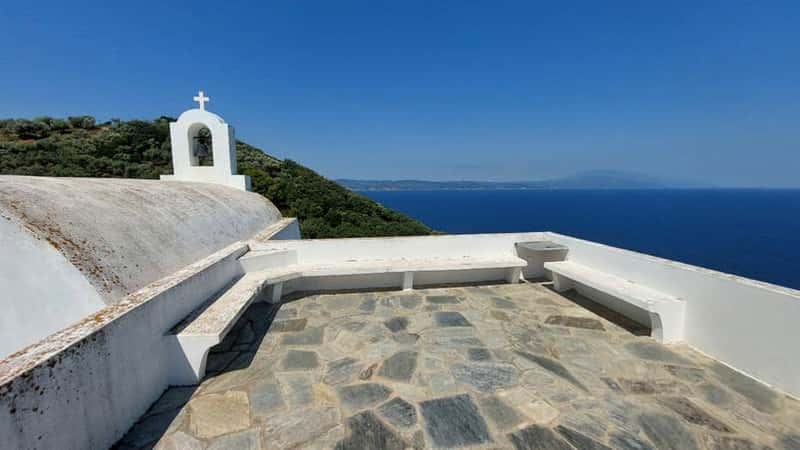
I always make room for history. On Skiathos, that meant deliberately stepping away from the sea to visit its monasteries, which have shaped the island for centuries. I went to the Monastery of Evangelistria, one of the most important sites in modern Greek history. In 1807, one of the first flags of Greek independence was raised here—years before the official founding of the modern Greek state in 1830—making it a powerful symbolic place. If you’re lucky, you may witness a religious service or small ceremony, moments that add an unexpected depth and remind you that these monasteries are not museums, but still-living spaces of faith and continuity.
I also visited Agios Alexandros, quieter and far less known, where the atmosphere felt more introspective. Together, these monastic sites reflect centuries of Orthodox presence on the island and reveal a Skiathos that existed long before tourism reshaped its coastline. The architecture is restrained and functional, built to endure rather than impress, and deeply tied to the surrounding landscape. Most monasteries sit at higher elevations, which explains both their magnificent views and the difficulty of reaching them. That physical effort felt appropriate: the sense of spirituality here is inseparable from distance, silence, and the slow approach through the hills.
Vineyards and Resistance at Parissi Winery
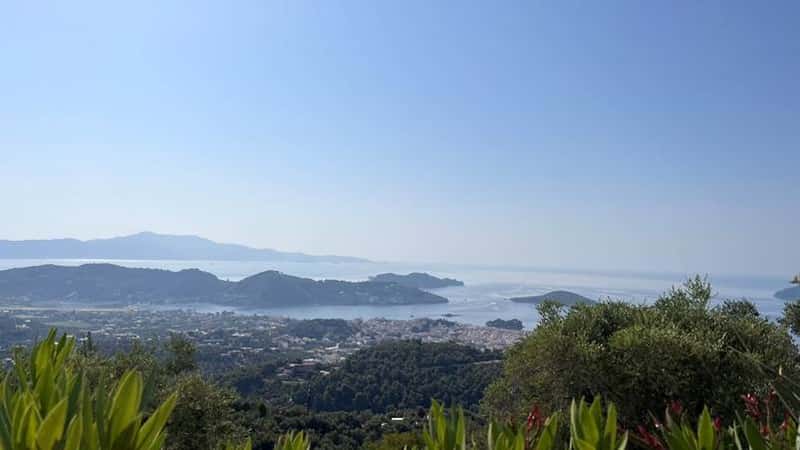
I’m always interested in places that resist erasure, and on Skiathos that resistance is visible in its vineyards. I visited Parissi Winery, one of the few producers still working the island’s land as foreign capital buys up nearby plots for luxury villas. Parissi continues small-scale production using local Greek grape varieties, producing honest, place-driven wines shaped by sun, sea air, and rocky soil. In an island economy now dominated by tourism, the winery feels like a quiet reminder of Skiathos’ agricultural past—and a deliberate choice to keep it alive. Much of the surrounding land has been sold at high prices for luxury tourist villas. Parissi holds on—cultivating vines, maintaining agricultural continuity, and preserving a tradition that once defined the island’s inland economy.
Historically, viticulture here supported local communities long before tourism reshaped the coastline. This quiet persistence felt like one of the most authentic expressions of Skiathos.
Getting There and Around
Ease of access was one of the main reasons I chose Skiathos. Skiathos International Airport connects the island to Athens with short flights—about 30–40 minutes. In summer, there are also many direct connections from European cities. That convenience matters. Less logistics means more time to observe, walk, and understand.
In order to explore the island, I chose to rent a car for flexibility, knowing it wouldn’t be easy. Roads on Skiathos are often narrow, poorly maintained, unpaved, and extremely steep. Some feel more like tracks than roads. Driving requires attention, but it allows access to beaches and interior areas that public transport doesn’t reach. Buses work well along the south coast, but they limit exploration. I accepted a rougher ride in exchange for independence.
A Great Choice for a Week-Long Escape
Skiathos delivered a recognizable Greece without becoming generic. I saw an island best understood through careful selection: choosing quieter beaches, accepting the uncertainty of Lalaria, following history into monasteries, and paying attention to vineyards that refuse to disappear. In one week, I did what I always aim to do—see less, but see it well.